
Call Us
+91-9717252255
Email Us
sales@vinylpipes.com
+91-9717252255
sales@vinylpipes.com
A borewell needs two kinds of casing. Plain casing pipe keeps soil and loose rock out of the hole, while a screen pipe, also called a slotted casing pipe, lets groundwater flow in at the water-bearing layer. Getting the screen right is one of the main reasons a well delivers clean water for years instead of pumping sand.
This guide explains what uPVC screen pipes are, how they differ from plain casing, where they sit in a borewell and what to check when you buy them.
A screen pipe is a length of casing with narrow slots cut through the wall. The slots are sized so that water can pass into the well while most of the surrounding sand and gravel cannot. Screen pipes are joined to plain casing pipes to make one continuous casing string: plain pipe through the upper layers and screen pipe across the aquifer.
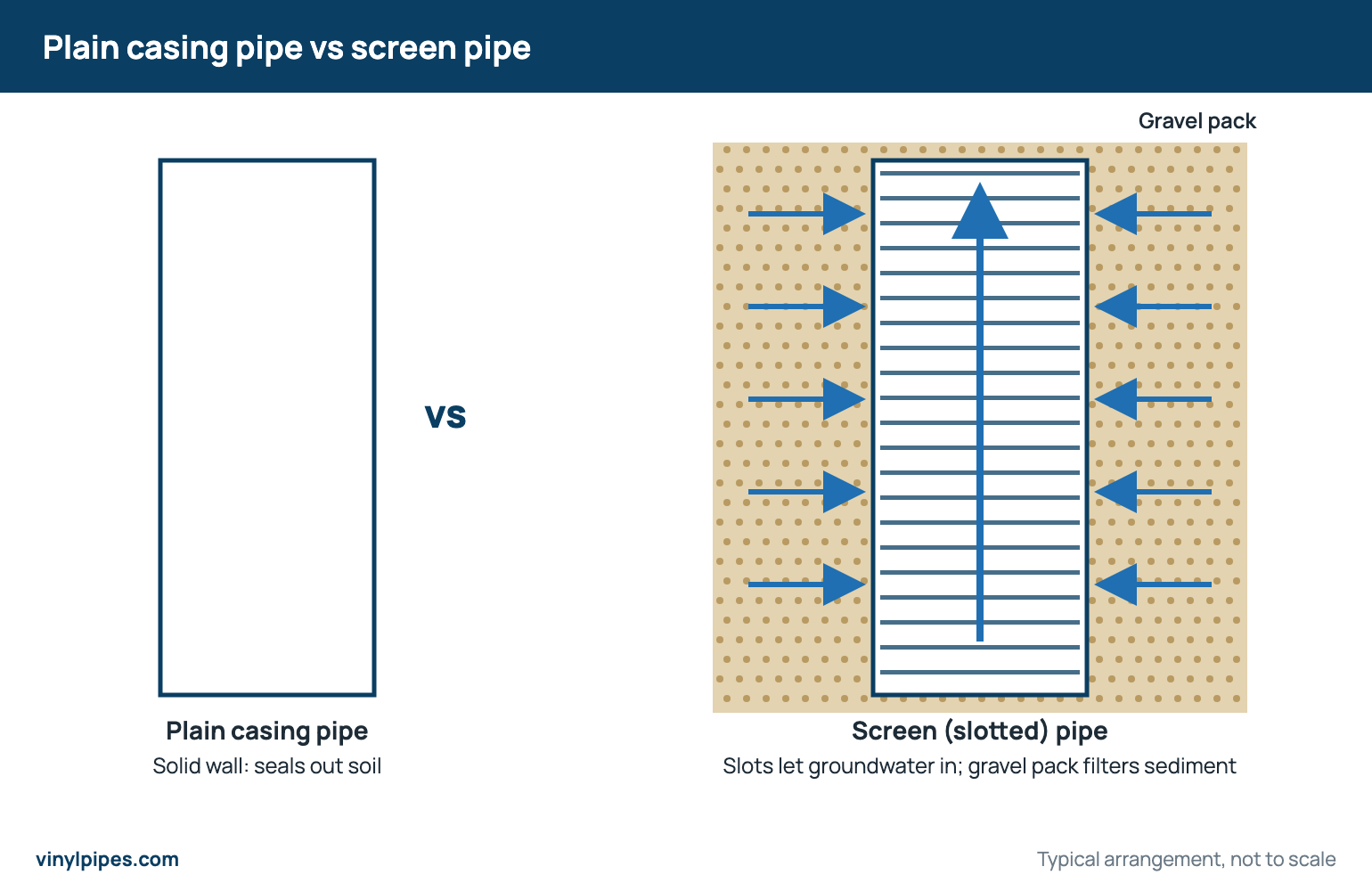
Vinyl Pipes supplies screen pipes alongside its uPVC casing pipes. They feature precision-engineered slots that filter sediments to help maintain water clarity.
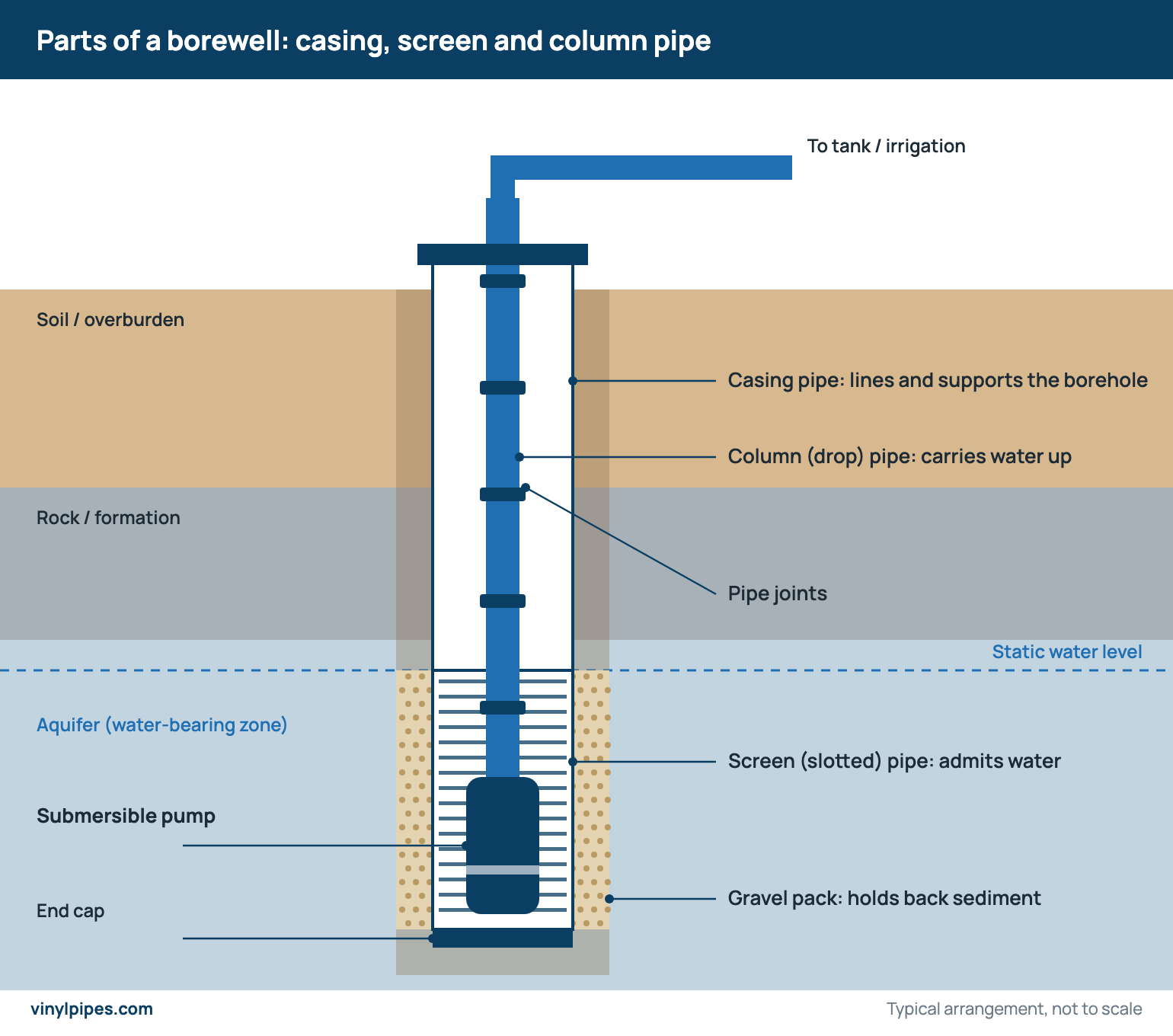
In a typical water well the casing string runs from the surface down through the soil and unstable layers. The screen section is placed across the water-bearing formation, and an end cap closes the bottom of the string. The space between the screen and the borehole wall is usually filled with a graded gravel pack, which supports the formation and adds a second filter stage.
Buyers search for the same product under several names. Screen pipe, well screen pipe and slotted casing pipe all describe casing with slots for water entry. Ribbed screen pipe is a market term for screen pipes whose wall carries raised ribs. Designs vary between manufacturers, so always ask for the slot size, slot pattern and pipe dimensions rather than relying on the name alone.
Screens sit permanently in groundwater, so the material has to last. Vinyl uPVC casing products are:
Yes. Both terms describe casing pipe with slots that let groundwater into the well. "Well screen" and "screen pipe" are the most common names.
A gravel pack is common in sand and gravel aquifers because it holds back fine particles and supports the borehole. The right approach depends on the formation, so follow your driller's recommendation.
Yes. Alongside its uPVC Deep Well and Medium Well casing pipes, Vinyl Pipes provides screen pipes with precision-engineered slots. Contact us with your borewell depth and diameter for a quote.
Related reading: pipes for the water well industry and best pipe for submersible pumps.