
Call Us
+91-9717252255
Email Us
sales@vinylpipes.com
+91-9717252255
sales@vinylpipes.com
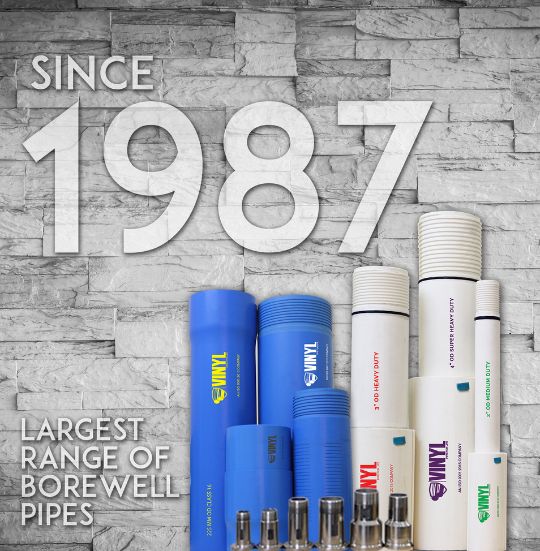
The Agriculture & Irrigation Industry is the foundation of sustainable food production, with water management playing a key role. Quality piping infrastructure ensures efficient water distribution and conservation in agricultural fields.
Supports efficient irrigation practices and water conservation
Requires corrosion-resistant and easy-to-install piping solutions
Enhances crop productivity through reliable water supply
Aligns with sustainable and eco-friendly farming methods
Vinyl Pipes delivers comprehensive uPVC piping systems tailored for agricultural needs, helping farmers and agribusinesses optimize irrigation performance.
Recommended pipes: uPVC Pressure Pipes, HDPE Pipes
Irrigation systems depend on pipes that carry water efficiently from the source to the field, often buried underground. Vinyl Pipes supplies uPVC pressure pipes and HDPE pipes for irrigation networks, and uPVC casing and column pipes for borewell-fed irrigation.
Vinyl uPVC pressure pipes withstand substantial internal pressure and are used for agricultural irrigation, landscaping and water distribution. Their smooth inner surface reduces friction, improving flow and lowering pumping costs.
Vinyl HDPE pipes are made from 100% virgin-grade PE-63, PE-80 and PE-100 material in compliance with BIS standard IS 4984, and are mainly installed below the soil surface for irrigation networks, potable water distribution and bore-well projects.
| uPVC Pressure Pipe | HDPE Pipe | |
|---|---|---|
| Material | uPVC | PE-63, PE-80, PE-100 (virgin grade) |
| Standard / rating | Class I to V, 2.5 to 10 kgf/cm² | IS 4984 |
| Jointing | Leak-proof pipe joints | Heat fusion (butt fusion or electrofusion) |
| Best suited to | Pressurised irrigation and water supply lines | Flexible buried lines over long distances |
These pipes come with a pressure rating between 2.5 Kgf/cm² and 10 Kgf/cm², making them well-suited for a wide range of demanding, high-pressure applications.
Yes. With their strong, leak-proof construction and ability to resist corrosion, they are built to perform reliably even in buried or concealed applications.
Yes. Vinyl uPVC pressure pipes are made from non-toxic materials and are free from harmful contaminants, ensuring they are safe for delivering clean, potable water.
HDPE pipe systems are used extensively for potable water supply, sewage and wastewater, and high-pressure gas distribution. They are also ideal for demanding applications like mining, slurry transport and agricultural irrigation systems.
HDPE pipe fittings are primarily joined using heat fusion methods like butt fusion or electrofusion. This process melts the pipe ends together to form a seamless joint that is stronger than the pipe itself, guaranteeing a leak-proof connection.
No Case Study posts found.