
Call Us
+91-9717252255
Email Us
sales@vinylpipes.com
+91-9717252255
sales@vinylpipes.com
Both uPVC and CPVC start as polyvinyl chloride, and both make rigid, corrosion-resistant pipe. The difference is chemistry: CPVC (chlorinated polyvinyl chloride) has extra chlorine added during manufacture, which raises the temperature it can handle. uPVC (unplasticized PVC) is PVC without plasticizers, so it stays rigid but has a lower temperature ceiling.
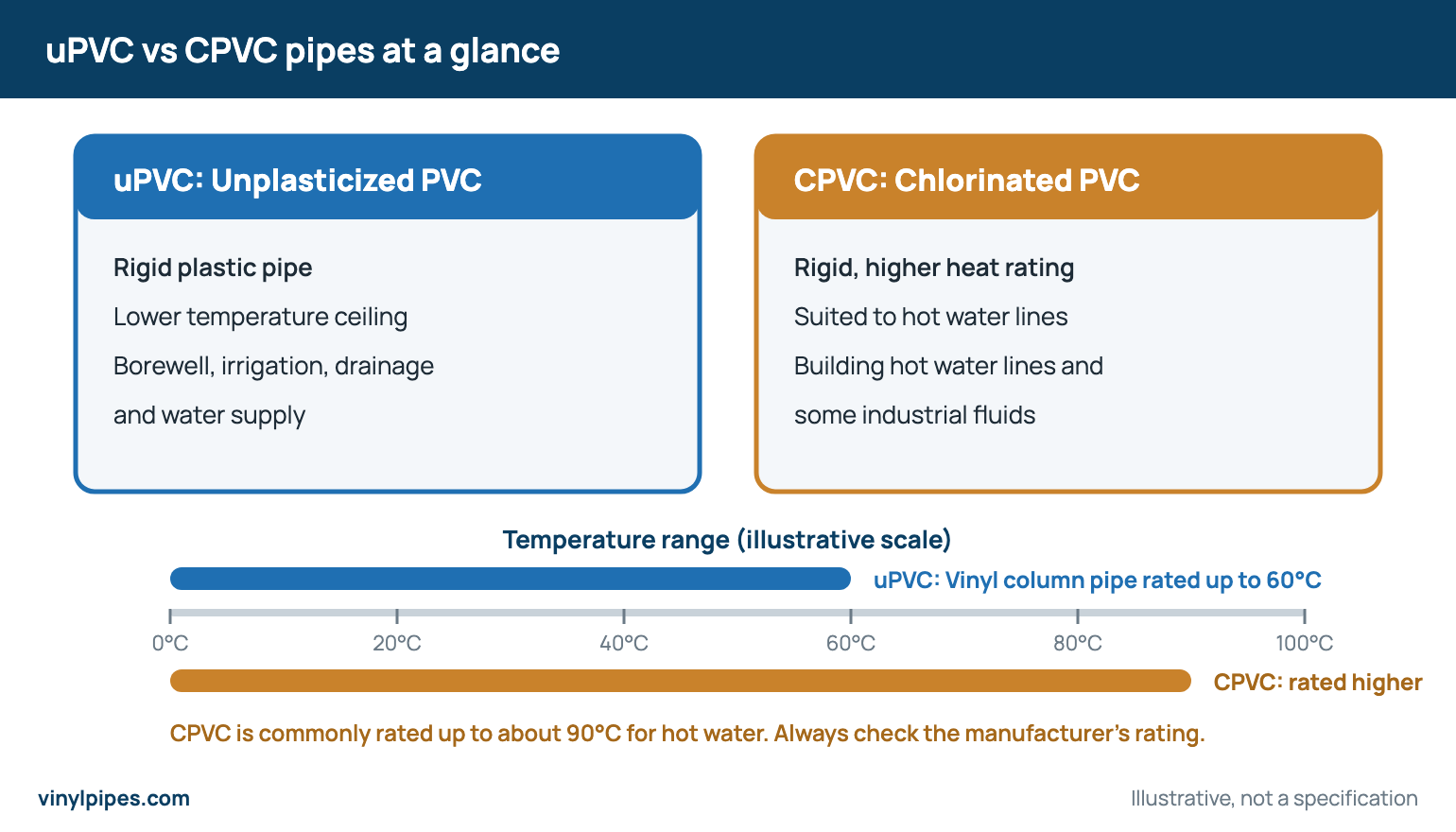
| Feature | uPVC | CPVC |
|---|---|---|
| Full name | Unplasticized polyvinyl chloride | Chlorinated polyvinyl chloride |
| Material | PVC without plasticizers, rigid | PVC with extra chlorine, rigid |
| Temperature | Lower ceiling. Vinyl's uPVC column pipe is rated up to 60°C | Higher. Commonly rated up to about 90°C for hot water, depending on the standard |
| Typical uses | Borewell casing and column pipes, irrigation, drainage, water supply | Hot water lines in buildings and some industrial fluids |
| Cost | Generally lower | Generally higher |
| Flexibility | Rigid, does not bend | Rigid, does not bend like HDPE |
Neither is better in general. CPVC is designed for higher temperatures, while uPVC is the economical, proven choice for borewells, irrigation and drainage, where its temperature rating is enough.
Only within its rated temperature and pressure. Vinyl's column pipe, for example, is rated up to 60°C. Confirm the rating of the exact product before using any pipe for hot water.
Both last for decades when used within their rating. Vinyl's uPVC column pipes have a life expectancy of over 50 years in borewell service.
Not sure which pipe your project needs? Contact Vinyl Pipes with your temperature, pressure and size.